Built by compliance. Not about compliance.
ZQUAS is built by people who spent their careers inside banks and financial markets. We watched the same architectural failures repeat across every institution. The tools weren't broken. The architecture was wrong. So we built a different one.
The people behind ZQUAS
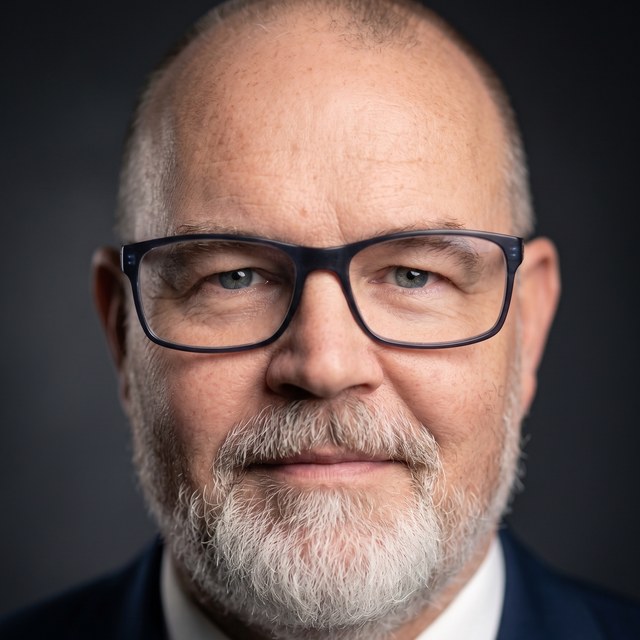
18 years in financial crime compliance at Tier-1 banks. RBS, Deutsche Bank, HSBC, Commerzbank on the banking side. ClearBank, Vivid Money, CoinMetro on the fintech side.
Self-taught GPU engineer. Writes the C++, CUDA, and Vulkan that ZQUAS runs on. Every design decision in the engine comes from sitting across the table from examiners and defending monitoring systems he knew were inadequate.
Professional Postgraduate Diploma in Financial Crime Compliance, International Compliance Association / University of Manchester.

Entrepreneur with 20+ years in global financial markets. Former founder and CEO of Object+, a financial software firm operating across Europe and the United States.
Spent his career at the intersection of banking, capital markets, and enterprise software. Leads commercial strategy, partnerships, and corporate development at ZQUAS, taking the engine to banks and financial institutions.
Previous: Object+ Financial Services BV, Object+Chicago LLC, ABN AMRO, ING.
Guided by practitioners
Frenkel Drevers, Regulatory Advisor
25+ years in financial services regulation. Former Manager at the Autoriteit Financiële Markten (AFM), the Dutch financial markets regulator, where he led supervisory audits, managed MiFID implementation, and provided regulatory interpretation guidance to financial institutions.
Subsequently spent 15 years advising banks, fintechs, and payment institutions on compliance, risk management, and regulatory licensing (DNB, AFM, FSMA) at Charco & Dique / Projective Group. Now independent, supporting international payment institutions and investment firms on compliance and governance.
Frenkel brings direct regulatory experience from both sides of the table: as regulator and as advisor to regulated firms.
Programmes and sandboxes
NVIDIA Inception program member
ZQUAS is a member of the NVIDIA Inception program. Inception is NVIDIA's global program for technology startups, providing access to developer resources, technical training, and exposure to the venture community. The program supports ZQUAS's GPU-native compliance work on the CUDA platform.
- FCA Supercharged Sandbox Taking part
- FCA Digital Sandbox Accepted in March 2026
The FCA does not endorse ZQUAS, its products or its results.
DNB InnovationHub
Submission under review with De Nederlandsche Bank's InnovationHub, the Dutch central bank's point of contact for firms developing financial innovations relevant to supervised activity.
Connect ZQUAS to your AI assistant
Model Context Protocol server
ZQUAS publishes a public MCP server at https://mcp.zquas.ai/mcp. Compliance officers, analysts, regulators, and engineers running Claude Desktop, Claude Code, Cursor, Zed, or any other MCP-compatible AI tool can add one line to their config and have ZQUAS available as a first-class knowledge source. The model can search every page, look up glossary terms, and retrieve published benchmark numbers as structured data. Public, no authentication. Built so an AI assistant grounds its answers in current ZQUAS material rather than stale training data.
Server card: /.well-known/mcp/server-card.json. Setup instructions: /llms.txt.
Let's talk
Interested in sovereign compliance infrastructure for your institution? Open to conversations with banks, regulators, and technology partners.